9 Ways to Untwist your Thinking

Wellness

A couple of months ago I wrote a blog post on 10 cognitive distortions. These distortions are ways that our brains twist our thinking and cause a negative thought patterns. Unfortunately, I left you guys hanging on how to resolve some of these thought patterns you might have encountered! Here are the 9 ways to untwist your thinking and put yourself in a better mental state.

In no way is this medical advice! I am providing you with information that I have learned and tried to help with my negative thought patterns. For more information on this topic check out David D. Burns a professor of psychiatry who wrote a book called Feeling good on this topic. Let’s get into untwisting our thinking.

1. Identifying the Distortion 

The first way to untwist your thinking is to write down the negative thoughts you are having. When you write down your thoughts it allows you to analyze what is going on! In my previous blog, I list the 10 Cognitive Distortions, looking through that list to identify which one best relates to your situation. This will help you understand your thought pattern and ease or diffuse the negativity by understanding what your mind is doing. 

2. Examine the Evidence 

Continuing with the writing method! We want to help reverse the thought or find the truth. Instead of believing the negativity try and find positivity. If you believe you are not good at anything, for example, try writing down 5 things you are good at. This method helps you see the other side of the thought. 

3. The Double Standard Method 

This method is about your thought pattern. Instead of putting yourself down treat yourself with compassion and do something for yourself. Give yourself the same advice you would give to a friend experiencing the same situation! You would be a lot more gentle with a friend. So treat yourself the same way.

4. The Experimental Technique 

Test yourself and your negative thoughts! Try and prove that your thoughts are not real. Do an experiment to prove otherwise. For instance, If you believe that eating in front of other people makes them believe you are disgusting. You want to test this theory. Once you know what you are testing rate the strentgh of this belief. Ask around and see what other people think of your concept. Conduct the experiement with people close to you or take a friends and complete it in a public space. Reflect on the results and try changing or adjusting the belief.

5. Thinking in Shades of Grey

This method works particularly well for the all or nothing thinking thought pattern. To refresh you memory, the all or nothing thinking distortion is when you believe you are a success or failure and there is little to no in between. The shades of grey are all of the other facts, opinons and beliefs surrounding you that are overlooked during this pattern of thinking. While using this method you want to rate your thought on a scale from 0-100. This helps you avoid seeing yourself as a failure and helps see it as a partial success. The rating helps you see the in between and the severity of the event.

6. The Survey Method 

This method can be helpful but also is not always the best. The survey method occurs when you reach out to friends, family or peers and ask if they have ever had these thoughts occur. For example, social anxiety can occur in new situations, and by relating to other’s experiences it can ease anxiety. It is not my favourite method, for instance some people are very confident and will not experience social anxiety. They may be very bold and say that it is not a big deal and be less sympathetic. Their answer should not reflect how you feel as they are experiencing it very differently. Try to find someone to relate to with similar values and beliefs to yours or someone who is empathetic about your social anxiety.

7. The Semantic Method 

This method requires changing the language of your negative thoughts!  When you say you shouldn’t have done something or should have done something it is important to change the language. It would be better if I did it this way instead of tearing yourself down. This relates to the growth mindset which I have written about on a instagram and the blog! Check it out @allureofmadison or How to Develop a Growth Mindset

8. Re- Attribution 

Re-attribution is rethinking your choice of negative thinking. If you say you are bad at something this technique makes you list all the contributing factors that could lead you to be not good at something. This lets you focus on the problem and not the outcome! This theory also comes in handy when you become a victim of self blaming. Identifying other root causes to the problem other then yourself can give you a better outlook on the event or situation.

I have added a worksheet to help your tackle some of the harder concepts. This worksheet will helps you break down your negative thoughts and help you readjust and see these thoughts in another way. Writing things down helps you decompress and most of the time gives you a different perspective on the situation at hand. I hope this helps and you try this next time you are in a negative thought pattern.

9. Cost-Benefit Analysis 

Pull out that pen and paper again! This technique involves laying out the advantages and disadvantages of a feeling, behaviour, self-defeating beliefs, or negative thoughts! This can be beneficial to see the disadvantages of being negative. This can be a very important technique when a person is procrastinating a decision or is overwhelemed by a choice. Laying out your options and weighing out the pros and cons helps you better decide. This method allows people to view all potential outcomes. I have attached a worksheet for this method specifically. This has helped me a lot when I become overwhelemed making decisions. It weighs out all of the options good and bad. It provides a great visual and assists you better by laying out all the pros and cons. Also, it makes you consider all options. In this example, I use tolerating distress but you can substitute that for any situation.

These 9 ways to untwist your thinking can be super beneficial. I encourage you all to try these methods in different situations that arise in your life. If you are looking for more information you can refer to Cogntive Behavioural Therapy techniques and tips online or check out the book by David Burns. I hope you found this blog helpful. I wish you all good health and happy thoughts.

Lots of love,

Madison.

YOU ARE WHAT YOU EAT- GUIDE TO GUT HEALTH

Wellness
Photo by Kat Jayne on Pexels.com

Your gut is linked to your overall health. Your gut can cause and produce effects on your body to things you didn’t even know were related. What we put in our bodies directly affects how we will feel. You may not necessarily equate what you are feeling to your gut directly as the symptoms do not align with typical gut problems. Many signs can demonstrate to you that there might be a problem in your gut. Always consult with a doctor if you are experiencing gut issues! I am sharing some things I have noticed in my health and through some research. In no way is this medical advice!

SIGNS YOUR GUT MAY BE IN TROUBLE

Digestion issues: gas, bloating, constipation

Mental issues: depression, anxiety, brain fog

Vitamin and mineral deficiency: D, K, magnesium, B12, and B7

Overuse of antibiotics

Chronic and unmanaged stress

Skin problems: acne, eczema

Autoimmune diseases: arthritis, IBS

GUT HEALTH FOODS

Bone Broth: helps repair cell walls, contains collagen which is beneficial for skin and joints. Boosts immune system. Rich in nutrients. Drinking bone broth or using it as a soup base is a great way to integrate it into your diet.

Coconut Oil: easy to digest, helps boost energy levels, and burn fat. Absorbs fat-soluble vitamins. Prevent stomach ulcers. Incorporate through switching your cooking oil.

Fermented foods: probiotics, improved digestion, provides good bacteria, and can help some people lose weight. Add fermented foods to lunch as toppings or sides.

Kombucha: probiotic that fights candida, heals your gut, and can improve your mental clarity. Drink kombucha once a day with or without a meal! There are many different flavours on the market.

Kefir: improve digestion and has calcium. You can put kefir in smoothies, salads, or replace it for yogurt.

Ginger: fights bad bacteria, boosts your immune system, eases nausea and inflammation. Eat it fresh on top of foods or make a tea.

Turmeric: superfood that has an incredible anti-inflammatory effect and is an antioxidant. Turmeric is great to season food, add to smoothies, or even better in a tea.

Omega 3 foods: good bacteria in your gut, good for your brain, eyes, and weight loss. Wild-caught salmon, walnuts, and chia seeds.

Sweet Potato’s: help with fibre and antioxidant intake. Fermentable starches that restore gut flora. High in vitamins.

KEY GUT TERMS

Probiotics: good bacteria for your gut they help heal your digestive system. Yogurt, kefir, pickles, kombucha. Or it can be bought as a supplement.

Collagen: It helps with connective tissues in your body. Helps with intestinal permeability or leaky gut syndrome increasing your gut wall strength. Found in animal skins, bone broth, or in supplement form.

Candida: is a fungi that lives in the body mostly in the intestines. Candida can begin to grow and spread. When it gets out of hand you can experience gut problems.

Gut Flora: Is the term to describe your gut and the functions that it plays in maintaining and fighting off poor gut health. Poor gut flora equals to poor gut health.

Fat-Soluble Vitamins: vitamins that can dissolve in fats and oils. They can be stored in fatty tissue until needed. Vitamins A, D, E and K

Antioxidant: Something that provides oxidation. Protects from free radicals which can cause disease which is produced when food is broken down. Onions, Leeks, berries, spinach.

Photo by Samuel Silitonga on Pexels.com

KEY WAYS TO KEEP A CLEAN AND HEALTHY GUT

Take probiotics

Drink lots of water

Exercise

Reduce your stress levels

Avoid toxins (sugar, grains, dairy, and oils)

I hope this gives you a little more information on how to keep one of the most important parts of the body feeling clean and healthy. It is important to recognize the signs of poor gut health and begin to take action as soon as you can to make yourself feel better!

10 Cognitive Distortions

Wellness
Photo by Ivan Bertolazzi on Pexels.com

Sometimes your mind runs wild, it happens to everyone. Your mind starts releasing thoughts that are irrational or exaggerated and you do not notice that these thoughts aren’t normal. These kinds of thoughts are cognitive distortions. Cognitive distortions are reinforced when we do not try and untwist our thoughts. We must recognize how our mind is working and find ways to settle our mind and put a positive outlook back into our perspective. These thoughts can be recurring or can come out of the blue.

David Burns M.D. released the Feeling Good Handbook in 1989 and suggested that there are 10 cognitive distortions that people experience in their everyday life.

  1. All or Nothing Thinking
Photo by David Bartus on Pexels.com

This type of thinking is where you see things in black or white. This means that you regard activities as either a success or failure; there is no in-between. This kind of thinking involves even the slightest bit of uncertainty is seen as a failure. For example, if you were in an interview and you were caught off guard by a question and you don’t believe your answer was good enough. A person who thinks this way would see the whole thing as a failure and waste of time due to the mind focusing on that one slight set back.

2. Overgeneralization

Overgeneralization occurs when past events that did not turn out well or failed affect how you see your future. For example, the boyfriend who may have broken up with you last year doesn’t mean that you will never find love again. Overgeneralization is when you believe that you cannot achieve anything again because of previous situations that relate. It can leave you feeling hopeless and lost. This type of thinking can cause major setbacks in life.

3. Mental Filter

Photo by SplitShire on Pexels.com

This is a very common distortion of thinking in this digital world. Through millions of comments and likes it can be hard to not focus what people say about you. When the mental filter distortion comes into effect is when out of 20 positive comments there is one that is negative leading you to only focus on that negative. This focus can last for up to days you can even obsess over this reaction.

4. Discounting the Positive

Discounting the positive occurs when you achieve something no matter how big and you say it doesn’t count or it’s not a big deal. Anything that you achieve should be celebrated no matter how big or small. Not rewarding yourself takes the joy out of activities. It also makes you believe that you aren’t achieving anything. For example, passing a test should be celebrated and not judged if you could’ve done better or if your friend received a higher score.

5. Jumping to Conclusions

Photo by SamIro on Pexels.com

This one is pretty obvious, and you may have experienced it before. This is when you overthink and interpret things with no facts to support your thinking. It can be demonstrated in two ways.

Mind Reading: This kind of jumping to conclusions is when you think you know what others are thinking. This normally occurs when you believe others are thinking about you in a negative light or talking about you in general.

Fortune Telling: This occurs before the situation even happens. Your mind jumps to conclusions and guesses what is going to happen in the future thinking that is going to end badly.

6. Magnification

Photo by fotografierende on Pexels.com

Magnification occurs when a person exaggerates the importance of a problem or a shortcoming. For example, it is not the end of the world to get 60% on a test worth 5%. It will not dramatically impact you or your mark, but this instance can be blown out of proportion at the moment. Another way this could be looked at is if you don’t get a job it does not mean you won’t get another one. It just means you have to keep trying.

7. Emotional Reasoning

This one is a hard spot to be in mentally. Emotional reasoning captures the emotion you feel reflect the way things are. You may personally think you’re overweight but in the eyes of others and doctors you aren’t. Your mind is telling you are, so you are believing it. Another big one is you may feel lonely and connect that you must be unloved and not cared for which again is certainly not the case.

8. Should Statements

Should statements occur when the situation did not go as expected or planned and you allow yourself to have guilt seep in. It should equate to not doing or wishing something would happen. These should statements could be turned into motivation but sometimes the only thing they do is make us feel worse about what we’re not doing.

  • I should exercise more but I have to do ____.
  • I should stretch at night but I’m too tired.
  • I should try that but that requires a lot of time.

Reframing perspective and trying to understand why you should or the benefits of doing something will help make should statements more motivating and empowering then something you just say.

9. Labelling

Photo by Linda Eller-Shein on Pexels.com

Labeling is a form of all or nothing thinking but is more extreme to the point of downing yourself and you becoming your own enemy number one. I have been a victim of labelling on multiple occasions and it is an error that I try my best to change. Labelling for instance could be not believing you’re not living up to the standards of others and calling yourself a loser or stupid. It could be deciding to take a different path and labelling yourself a failure. Labelling is irrational and causes your self-esteem to drop and encourage more anxiety. Looking at your situation in a positive light and boosting yourself up with positive self-talk can help get you out of this slump.

10. Personalization and Blame

Personalization and blame are important things to recognize. Not every problem or situation that arises in your life is your fault. Blame is another important thing to realize you may do. When you send your child to school and they struggle in math don’t take that to heart. It does not mean you are a bad mother. It also may not mean that the teacher isn’t good.  Personalization and blame lead to feelings of guilt and shame. Blaming yourself always deters from solving the real issue or problem that has occurred. Also blaming others when they aren’t at fault can cause frustration and guilt.

These 10 cognitive distortions can play a big role in the lives of those who struggle with anxiety and depression. The cognitive distortions can overwhelm the mind of anyone who is facing a challenge or is not feeling confident in themselves. It is important to realize that these distortions exist so that in the future or the now we can help reverse and get out of these poor mental states and improve our mental health together! Stay tuned on the blog this week for some tricks to untwist your thinking which will help you overcome the cognitive distortions.

Also, if you are looking for more information and want to dive deeper into this topic you can pick up David D. Burns, M.D. book The Feeling Good Handbook available on amazon or at chapters!

8 Tips to Boost your Night Time Routine

Wellness

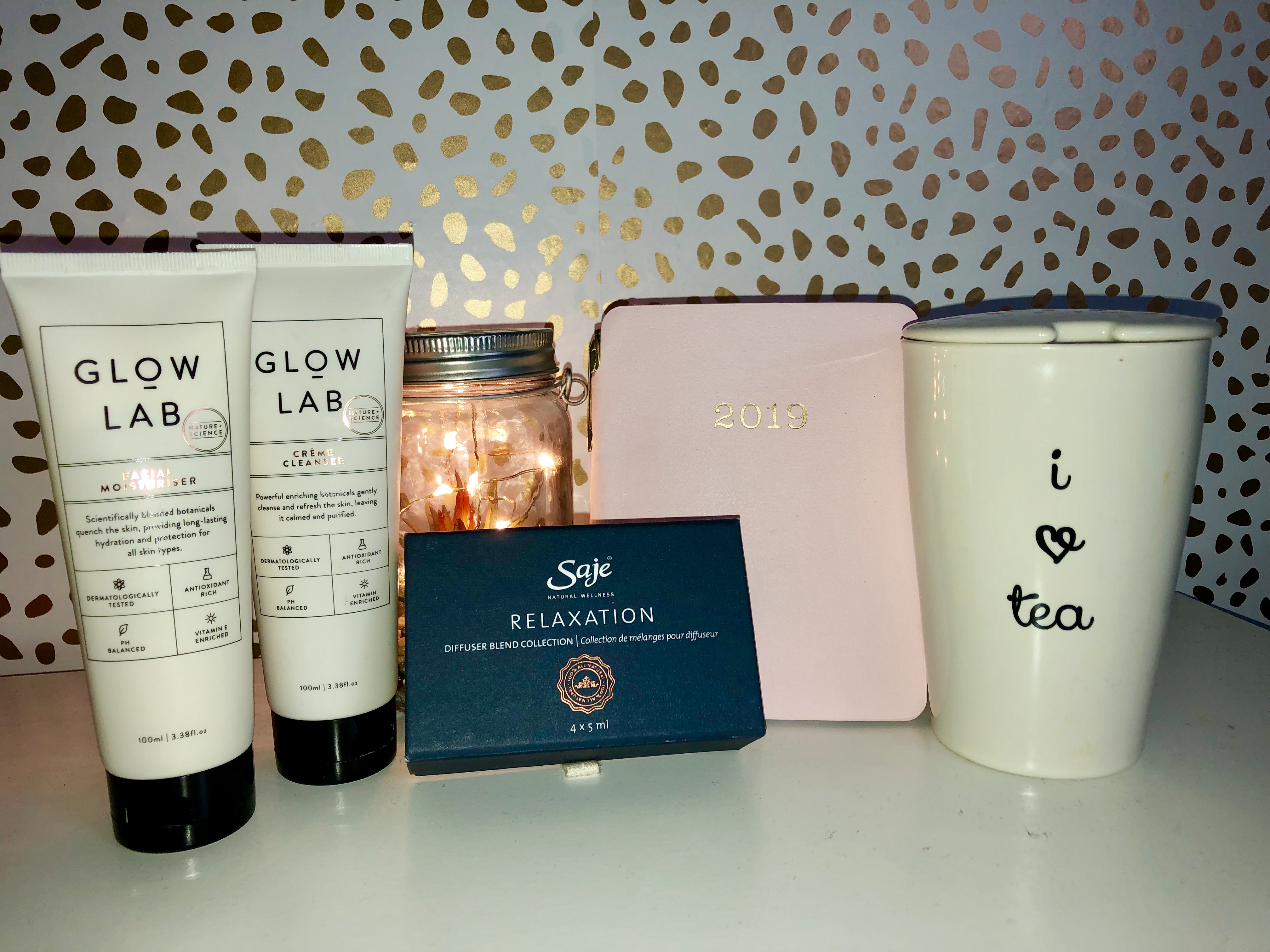
The end of the day comes with big yawns and is a time for comfortable clothing. It is important to still make sure that you are providing your body with relaxation and preparing it for another day. These 10 tips have provided me with more energy and relaxation throughout the night.

  1. Take 10 to 15 Minutes to Stretch.
Photo by Pixabay on Pexels.com

Stretching is important at the end of the day for everyone. Whether you are stuck at a desk all day or you stand throughout the day, a good stretch will provide your body with some relief. Stretching not only increases your flexibility but can help reverse poor posture that may ensue during your day to day activities.  Stretching is also a great way to calm your mind and reduce stress. There are many ways to stretch. Some people may partake in a yoga class or do yoga at home. Another way is to start at your head and stretch your body until you reach your toes. 10 to 15 minutes of stretching can be in front of the tv or be incorporated when making dinner which makes it easier for all of our busy lives.

2. Have Some Chamomile Tea

 Have some chamomile tea to help wind down at night, drinking it 30 minutes before bedtime is when it will have the best effects. Chamomile tea can help reduce inflammation and ease pain. This will help your body settle and get ready for rest. Chamomile tea has also been known to decrease anxiety which can allow a person to better relax. This tea has also been known to help put people to sleep with its apigenin component. It is a mild sleep enhancer that creates a better sleep and calming effect.

3. Wash your Face.

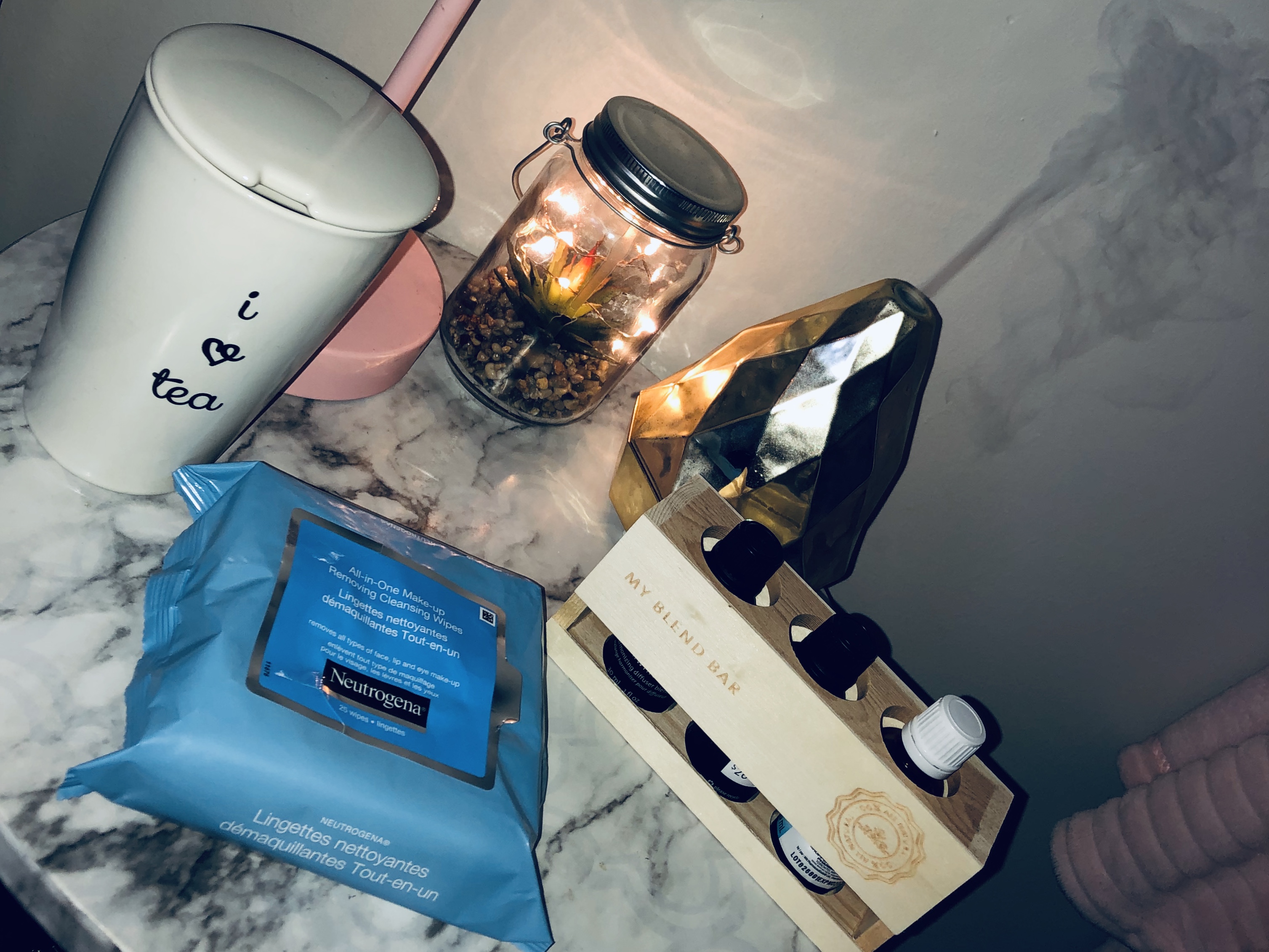
The day is dirty. All-day you have been out in the world and have encountered so many things. Ladies we all know that sleeping in make-up is a major cause of clogged and dirty pores. Even if you do not have the energy to wash your face entirely my secret tip is storing make-up wipes beside my bed to ensure even on those long nights out that I can wipe off my face. Washing your face with a gentle cleanser will manage oils and reduce clogged pores ensuring brighter skin for the morning.

4. Lay out your Clothes

Photo by Ylanite Koppens on Pexels.com

Deciding what you are going to wear in the morning saves major time. I know this does not seem like a game-changer but believe me… When I take the little extra time to lay out my clothes, I not only pick something nicer, but I choose accessories and look and feel better. Do you ever get that feeling in the morning where all you want is to stay in your pyjamas? If you decide your outfit while you are refreshed it will save you time, provide you with motivation and fewer decisions when you are foggy in the morning.

5. Take Time for Yourself

Although you have been at work all day and you want to come home and spend time with whoever is waiting for you it is still important that you find time in your evening for some self-care. Having at least 20 minutes to yourself is a super important piece to making sure you become relaxed and happier. Whether you have a bath, do a face mask, go for a walk, or read a book anything that you treat yourself to and take care of yourself will benefit your body and mind. It is not selfish to take time for you!

6. Turn off the Electronics

 At least 2-3 times a week it is good to have a night of digital detox. I have found this very helpful for not only my mind but for fostering relationships. Especially at night time, this becomes extremely important. The blue light emitted from these devices can affect your sleep patterns. The body may begin producing less melatonin (the hormone that regulates sleep) which creates a worse sleep or no sleep at all. Another reason for a digital detox is to take a break from your friend’s posts or the tasty chef cooking videos! I assure you they will be there when you are back.

7. Gratitude Journal

A gratitude journal is a place where you can release your thoughts from the day and de-stress. Not only can you write down everything on your mind it provides you a place to write down 3 things you are grateful for each day even if it is just getting into your cozy bed. This journal also lets you write down all your thoughts before you hit the pillow allowing your brain to not worry or focus too heavily on the stresses of today or tomorrow. Having a journal lets you stray away from electronics.

8. Turn on your Aromatherapy

The healing powers of aromatherapy can do wonders for your sleep. It will destress your body as you relax and unwind. Relax with the scent of lavender in your room a natural way to calm your mind. If you feel stuffed up at night diffuse some peppermint oil and allow your nose to breathe freely. If you don’t have a diffuser no problem! Put a few drops in your hands and take a few deep breaths or mix water and oils in spray bottle and mist over your bed.

I hope a few of these tips can be incorporated into your daily night time routine! Let me know if any of these tips end up working for you in the comments.